Political Communication · Computational Methods · Large Language Models
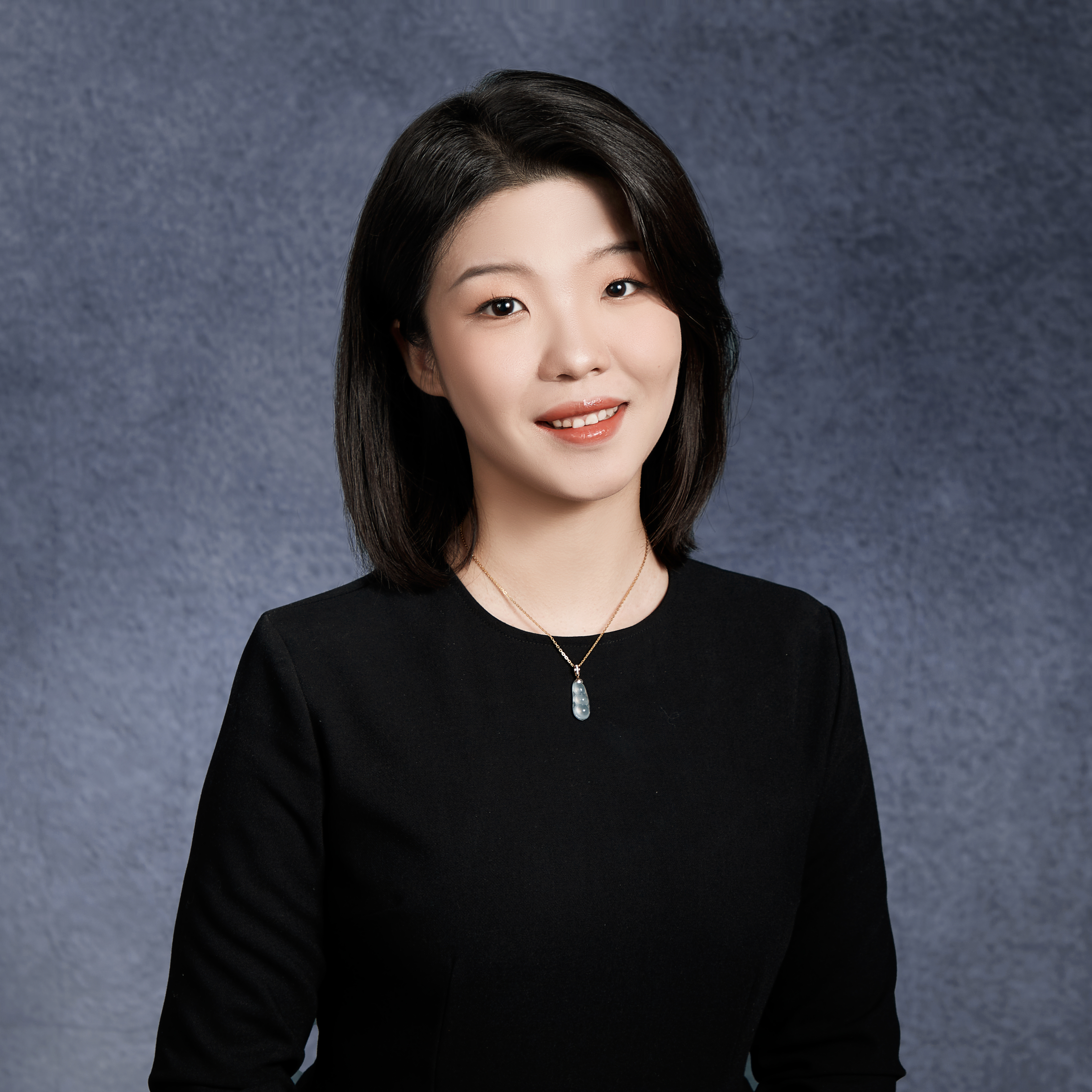
Yingdan Lu
Assistant Professor, Department of Communication Studies
School of Communication, Northwestern University
Political Communication · Computational Methods · Large Language Models
Assistant Professor, Department of Communication Studies
School of Communication, Northwestern University
Welcome to my home page! I am an Assistant Professor of Communication Studies in the School of Communication at Northwestern University. I am the director of the Computational Media and Politics Lab, a co-director of the Computational Multimodal Communication Lab, a core faculty member in Northwestern's Media, Technology, and Society (MTS) and Technology and Social Behavior (TSB) PhD programs, and affiliated with the Northwestern Institute on Complex Systems (NICO), the Center for Communication & Public Policy, the Center for Human-Computer Interaction + Design, and the Cognitive Science Program.
My research uses computational methods and large language models to understand how authoritarian governments use digital media and artificial intelligence to maintain their rule, and multimodal communication in AI-mediated environments. My work has appeared in journals including Proceedings of the National Academy of Sciences, American Journal of Political Science, Journal of Communication, Political Communication, New Media & Society, and Human-Computer Interaction, as well as in peer-reviewed conference proceedings such as the ACM Conference on Computer-Supported Cooperative Work and Social Computing (CSCW).
As a computational social scientist, my past and ongoing research has focused on advancing computational methods through the development of new frameworks analyzing multimodal data such as images and videos, the analysis of cross-lingual digital communication, and the promotion of mixed-method research.
I received my Ph.D. in Communication at Stanford University in 2023, advised by Professor Jennifer Pan, where I also earned a Ph.D. minor in Political Science and an M.A. from the Center for East Asian Studies. I obtained my B.A. from the School of Journalism and Communication at Tsinghua University.
How authoritarian regimes leverage digital platforms, algorithms, and AI to control information, shape narratives, and influence public opinion and behavior.
How individuals encounter and communicate (mis)information comprising multiple modalities (text, visual, audio) across various communication contexts.
Recent and upcoming
Authoritarian governments have increasingly expanded their social media presence, producing massive content to shape public opinion and behavior. However, less is known about how social media algorithms curate such content and serve authoritarian political goals. This study theorizes algorithmic promotional curation, whereby recommendation algorithms systematically amplify state-created content, and empirically examines this curation through analyzing 119,064 trending and recommended videos from Bilibili, one of China’s largest video-sharing platforms. Using descriptive analyses, regression models, and Markov chain simulations, we find that state-created content is disproportionately amplified through video recommendations associated with state-created trending videos, and that state-affiliated accounts exhibit strong self-reinforcement. Yet this algorithmic promotional curation is not uniform across content categories, with stronger amplification among state-created news and politics than other content. These findings demonstrate how recommendation systems may subtly serve authoritarian goals, advance a multilateral understanding of algorithmic curation, and extend authoritarian information control frameworks beyond censorship and propaganda.
Authoritarian regimes have increasingly co-opted non-state actors such as celebrities and fans to extend the reach of state propaganda in fragmented digital environments. Despite this growing trend, there remains limited understanding of how fans in authoritarian contexts respond to such efforts. This paper identified a novel phenomenon, performative propaganda engagement, to explain why and how celebrity fans in informational autocracies engage with state propaganda. Combining quantitative analysis of fan engagement with People’s Daily on Weibo and qualitative interviews with celebrity fans in China, this exploratory research finds that celebrity fans actively incorporate the promotion of state propaganda into their daily activities, aiming to enhance the visibility and reputation of their celebrities. Fans primarily engage with celebrity-signaling propaganda, and some of this engagement is instrumental. This research contributes to political communication theory by offering an alternative view of the downstream effects of digital propaganda in authoritarian contexts. The findings shed light on how non-state actors are strategically incorporated into state communication efforts and how fans may behave under a compliance-based logic shaped by political constraints and platform incentives, bridging scholarship on authoritarian information control, fandom politics, and algorithmic media environments.
Photorealistic AI-generated images (AIGIs) are increasingly indistinguishable from real photographs, raising significant social concerns. While prior research focuses on the production quality and detection of photorealistic AIGIs, such research often overlooks their expressive features. This study focuses on surrealism as a key feature of AIGIs, and introduces the concept of algorithmic surrealism to capture AIGIs' algorithmically driven and public accessible generative processes and consequences. Using 28,290 AIGIs collected from Instagram creators and a mixed-methods, Large Language Model (LLM)-assisted framework, we categorized physical, behavioral, and contextual surrealism at scale and found a pervasive presence of surrealism in AIGIs. Topic network and qualitative analyses show that algorithmic surrealism often appears in hybrid forms, indicates patterns of visual excess, reinforces stereotypes, transforms technical flaws into surreal aesthetic features, and exhibits visual homogenization tendencies. This study advances the theoretical understanding of surrealism and photorealism in the age of generative AI. Methodologically, it contributes to computational social science by demonstrating an LLM-based framework that integrates computational, qualitative, and network analyses to examine complex visual concepts.
The rise of social media in the digital era poses unprecedented challenges to authoritarian regimes that aim to influence public attitudes and behaviors. To address these challenges, we argue that authoritarian regimes have adopted a decentralized approach to produce and disseminate propaganda on social media. In this model, tens of thousands of government workers and insiders are mobilized to produce and disseminate propaganda, and content flows in a multidirectional, rather than a top-down manner. We empirically demonstrate the existence of this new model in China by creating a novel data set of over five million videos from over 18,000 regime-affiliated accounts on Douyin, a popular social media platform in China. This paper supplements prevailing understandings of propaganda by showing theoretically and empirically how digital technologies are transforming not only the content of propaganda, but also how propaganda materials are produced and disseminated.
There is a widespread perception that China’s digital censorship distances its people from the global internet, and the Chinese Communist Party, through state-controlled media, is the main gatekeeper of information about foreign affairs. Our analysis of narratives about the Russo-Ukrainian War circulating on the Chinese social media platform Weibo challenges this view. Comparing narratives on Weibo with 8.26 million unique news articles from 2,500 of some of the most trafficked websites in China, Russia, Ukraine, and the United States (totaling 10,000 sites), we find that Russian news websites published more articles matching narratives found on Weibo than news websites from China, Ukraine, or the United States. Similarly, a plurality of Weibo narratives were most associated with narratives found on Russian news websites while less than ten percent were most associated with narratives from Chinese news sites. Narratives later appearing on Weibo were more likely to first appear on Russian rather than Chinese, Ukrainian, or US news websites, and Russian websites were highly influential for narratives appearing on Weibo. Altogether, these results show that Chinese state media was not the main gatekeeper of information about Russia’s invasion of Ukraine for Weibo users.
Northwestern University
MTS 525 · Ph.D. seminar
Digital technologies have prompted communication researchers to leverage massive digital datasets and computational tools to better understand the digital social environment. This research seminar offers an overview of key computational methods in social science research, with a focus on computational content analysis of large-scale digital data. We will explore main methods and techniques for digital data collection, machine learning, and the analysis of large-scale textual, visual, audio, and multimodal data. The course also examines current opportunities and challenges arising from recent computational breakthroughs, such as large language models (LLMs). Through engagement with key scholarship, hands-on programming tutorials, and research projects, students will gain a conceptual understanding of computational methods, receive practical training in integrating computational tools into their research, and develop a critical perspective on computational communication research
COMM_ST 379 / POLI_SCI 390 · Undergraduate lecture
Digital media and technologies, often considered liberation technology, have increasingly been employed by governments and non-political entities for political propaganda and repression. This course will examine the practices and implications of propaganda and repression within the digital media landscape. We will explore the role of digital media and technologies in authoritarian regimes, the common strategies and applications of digital propaganda and repression, and consider how various actors implement these tactics, along with their consequences and global impacts. Through course readings, in-class discussions, and student-led projects, students will develop a critical understanding of the interplay between digital media, politics, and civil society.
Research groups
The Computational Media and Politics (COMAP) Lab is an interdisciplinary research group led by Dr. Yingdan Lu in the Department of Communication Studies at Northwestern University. Our mission is to advance interdisciplinary scholarship on how digital technologies are transforming political communication globally. We aim to inform public policy, guide platform design, and enrich scholarly debates on the social, political, and global implications of digital media and artificial intelligence, contributing to democratic and more resilient information ecosystems worldwide.
The Computational Multi-Modal Communication Lab is a collaborative initiative led by Cuihua (Cindy) Shen at the University of California, Davis, Yilang Peng at the University of Georgia, and Yingdan Lu at Northwestern University. Our overarching aim is to leverage state-of-the-art computational social science methodologies, including computer vision, video analysis, audio processing, and natural language processing, to investigate the creation, dissemination and effects of visual, audio, and multimodal media in diverse topical and technological contexts, covering a broad range of topics such as the spread of visual misinformation, political propaganda, climate change, social movements, and the implications of AI-infused media. We are also interested in examining AI’s potential to advance social science research in general.